Custom AWS architecture
From architecture review to a load-balanced, RDS-backed platform
1
Architecture review
Audit of the existing AWS setup — single points of failure, DB contention under load.
2
High-level design
Target architecture: load-balanced app tier, managed DB tier, autoscaling policy.
3
Low-level design
Instance sizing, RDS config, failover behaviour, monitoring thresholds.
4
Build & cutover
Managed load-balanced servers + RDS live, ahead of applications season.
The challenge
One yearly peak, zero room for error
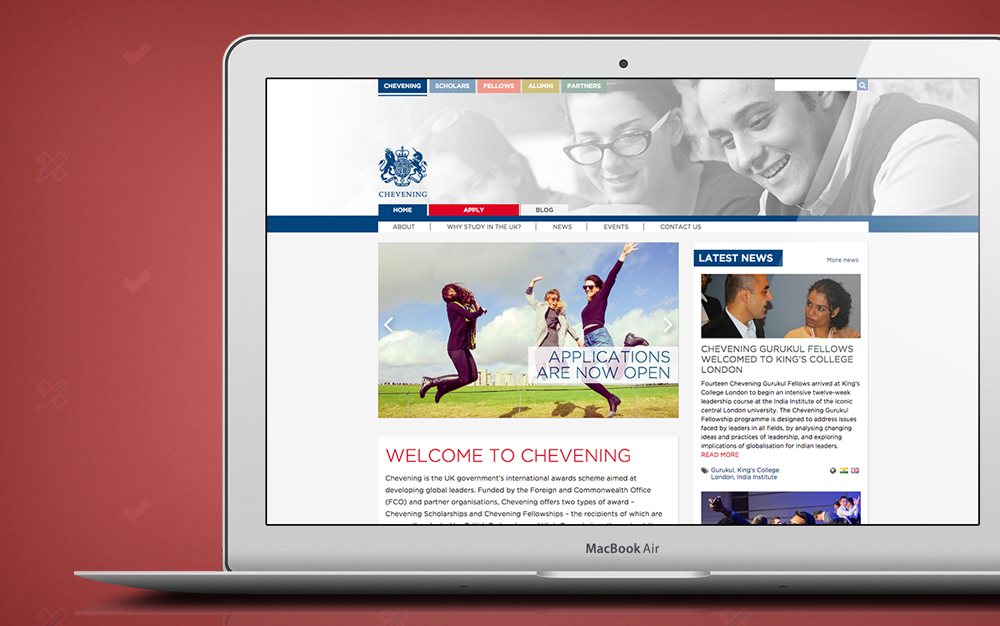
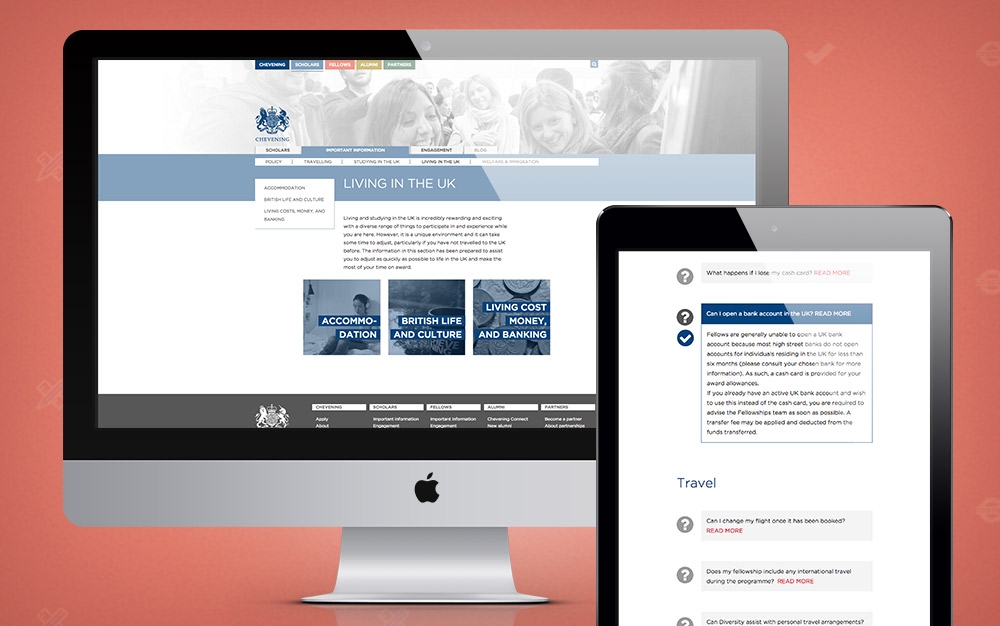
Chevening's site carries country pages, blogs, events and application forms for a global audience of scholars and fellows across 100+ countries. Once a year, applications season drives an enormous, concentrated spike in traffic and form submissions — and the existing single-server setup had no headroom for it, leaving the team exposed to slowdowns and outages at the exact moment they could least afford them.
The approach
Built to scale before the season starts
- Ran a full architecture review of the existing AWS setup: single points of failure, database contention under load, and where the current stack would break first under peak traffic.
- Produced a high-level design mapping the target architecture — load-balanced application tier, managed database tier, autoscaling policy — then a low-level design specifying instance sizing, RDS configuration, failover behaviour and monitoring thresholds.
- Rebuilt the hosting on managed, load-balanced servers behind an autoscaling application tier, with the database migrated onto RDS for managed failover, automated backups and read replicas.
- Put the whole estate on our standard Drupal support SLA — security patching, 24/7 monitoring and proactive capacity planning ahead of each application window.
The results
99.99% uptime, even at peak
- 99.99% uptime maintained through applications season, including its highest single-day traffic on record.
- Average load time dropped to 2.1s (from 6.4s) after the architecture rebuild and image optimisation.
- Accessibility score rose to 96, keeping the site aligned with public-sector accessibility requirements.
- The application tier now scales automatically ahead of demand instead of the team having to pre-provision capacity by hand each year.
“
Applications season used to mean crossed fingers. Now the infrastructure just scales, and we get on with running the programme.
David Osei
Communications Manager, Chevening
Running a site with a seasonal peak?
Tell us what you're running today — we'll show you what infrastructure built for peak load looks like.